The Midterms Are a Cost-of-Living Vote With Foreign-Policy Fingerprints
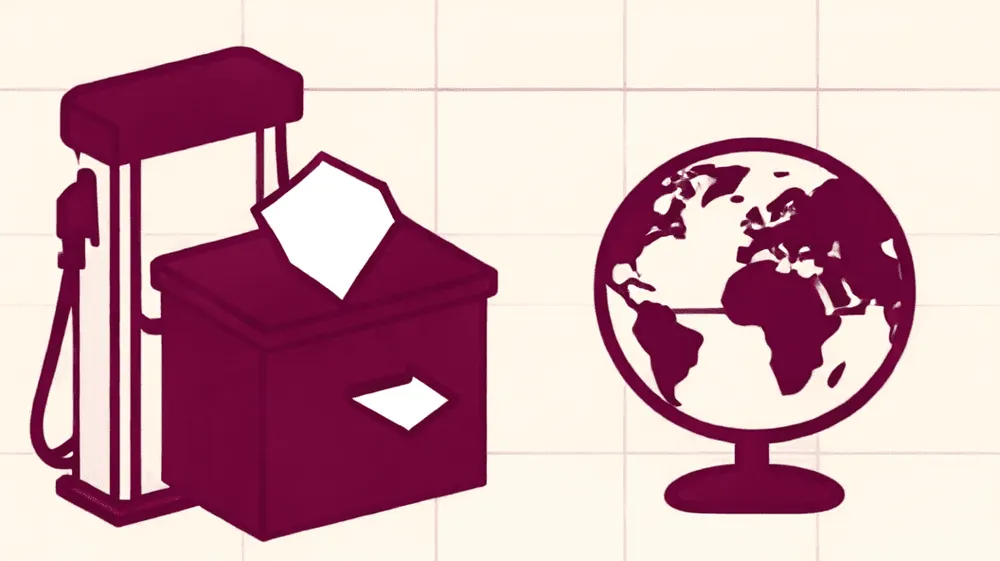
According to the Chicago Council on Global Affairs 2026 Survey, which was fielded between July 10 and July 21, 2026, inflation and the cost of living are the top priorities for voters at 37 percent. This economic focus stands in stark contrast to the weight assigned to direct international conflicts: only 2 percent of respondents identify the US-Iran war as their most important voting issue. However, the data suggests a significant transmission mechanism through which foreign policy shapes the domestic terrain: the impact of these geopolitical tensions on the pocketbook.
The Indirect Influence of Geopolitical Conflict on Domestic Inflation
While direct engagement in foreign wars may not be a primary driver for voters at the ballot box, the economic consequences of such conflicts are clearly visible in public sentiment. For example, a separate Institute for Global Affairs survey, cited by Chatham House, found that 81 percent of Americans believe the Iran war has raised the cost of living. This is further reinforced by the finding that 86 percent of voters view the conflict as bad for the cost of living. This suggests that voters are not necessarily voting for or against a war in a vacuum: rather, they are voting against the resulting inflationary pressures.
This economic link is particularly relevant when considering the current macroeconomic environment. As of September, the US Consumer Price Index (CPI) stood at 3.7 percent, with gasoline prices seeing a significant increase of 9.1 percent. When geopolitical instability in regions like the Middle East threatens energy stability, the immediate impact is felt at the pump and in the broader cost of living. This connection creates a scenario where foreign policy, regardless of its perceived importance as a standalone topic, becomes a central pillar of the midterm election through the lens of inflation.
There is a notable partisan divide in how the necessity of such conflicts is viewed. While 68 percent of the general population believes the Iran war has not been worthwhile to fight, 63 percent of Republicans argue that it is worthwhile.
The Tariff Paradox and the Midterm Vote
Trade policy represents another channel through which foreign policy enters the domestic economic sphere. A Cato Institute survey, cited by Chatham House, found that 75 percent of voters believe tariffs will be an important factor in their midterm vote. This highlights a fundamental tension in current economic policy: the distinction between national economic health and individual household costs.
The data reveals a split in how tariffs are perceived:
- A majority of voters (81 percent) state that tariffs are bad for the cost of living.
- A majority (71 percent) state that tariffs are bad for the economy.
- However, there is a significant Republican divide: while six in 10 Republicans agree that tariffs are bad for the cost of living, more than half also believe that tariffs are good for the US economy.
This divergence suggests a complex decision-making process for the electorate. For many, the trade-off is between a potentially more robust domestic industry and the immediate reality of higher consumer prices. The tension between these two outcomes is a defining feature of the upcoming election, particularly as voters weigh the long-term benefits of protectionism against the immediate pressure of inflation.
The Disconnect Between Policy and Public Priority
A central theme in current political analysis is the gap between the concerns of the electorate and the focus of political leaders. According to Chatham House analysis, a majority of people across the political spectrum believe that leaders are not paying enough attention to "pocketbook" issues. While politicians may focus on diplomatic maneuvering or international reputation, the voter is increasingly focused on the cost of goods and services.
This disconnect is exacerbated by the timing of major events. The Chicago Council survey was conducted in July, providing a snapshot of public sentiment before the economic shifts of the late summer and autumn. Since then, specific events such as the October 9 diesel license decision by the Trump administration have entered the terrain, potentially altering the economic variables that voters care about most. This creates a situation where political campaigns may be fighting over different sets of priorities: the "reputation" of the US abroad versus the "price" of fuel at the pump.
| Finding | Share of respondents | Survey |
|---|---|---|
| Inflation and cost of living is the top voting issue | 37% | Chicago Council (July 2026) |
| Government corruption, or control of Congress, is the top voting issue | 19% each | Chicago Council |
| The US-Iran war is the most important voting issue | 2% | Chicago Council |
| The Iran war is bad for the cost of living | 86% | Chicago Council |
| The Iran war has not been worth fighting | 68% (31% say it has) | Chicago Council |
| Tariffs are bad for the cost of living / the economy | 81% / 71% | Chicago Council |
| Tariffs will matter to their midterm vote | 75% | Cato Institute (cited by Chatham House) |
The Economic Transmission of Geopolitical Risk
To understand why foreign policy matters so little as a topic but so much as a driver, one must examine the mechanics of how geopolitical risk becomes inflation. When conflict in the Middle East escalates, the primary transmission is through energy markets. The 86 percent of voters who see the Iran war as a threat to the cost of living are reacting to the volatility that conflict introduces into the global supply of energy. This is not a theoretical concern: the 9.1 percent rise in gasoline prices in September is consistent with energy-market pressure, though the BLS release does not attribute it to the war.
This suggests a scenario where the "foreign policy" of the 2026 election is not about alliances or treaties, but about the stability of the supply chain. An investor might view the Iran war as a geopolitical risk, but a consumer views it as a "gasoline price" risk. This shift in perception changes the nature of political accountability: leaders cannot easily defend their foreign policy if that policy is seen as the direct cause of a 9 percent spike in fuel costs.
An alternative reading is that voters may eventually decouple the two: if the economy stabilizes despite ongoing conflicts, the "cost of living" sentiment might shift away from geopolitical drivers. However, as long as energy and consumer goods prices remain volatile, the "foreign policy fingerprint" on the cost of living is likely to remain a dominant theme.
Strategic Outlook for Stakeholders
For those navigating the political and economic terrain of the 2026 midterms, several key indicators and dates will be critical. The following sectors should monitor these developments closely:
- Investors: Monitor energy volatility and inflation-sensitive indices.
- Policymakers: Address the "pocketbook gap." There is a significant risk that political messaging focused on national security or international prestige will fail to resonate if it does not explicitly address the inflation concerns that 37 percent of the population identifies as their top priority.
- Regulators: Watch the impact of recent policy shifts, such as the October 9 diesel license, on consumer price indices in the final weeks leading up to the November 3 elections.
One indicator to watch is the stability of consumer prices in the weeks before November 3.
Watch For
There are significant unknowns that could alter these projections. It is currently unconfirmed whether the September CPI data will remain at the 3.7 percent level or if the October diesel license will have a delayed effect on gasoline prices. Additionally, while the July survey provides a baseline, the impact of the actual geopolitical developments in the fall remains to be fully realized in the public's mind.
Sources: globalaffairs.org, chathamhouse.org, globalaffairs.org.